EN | DE

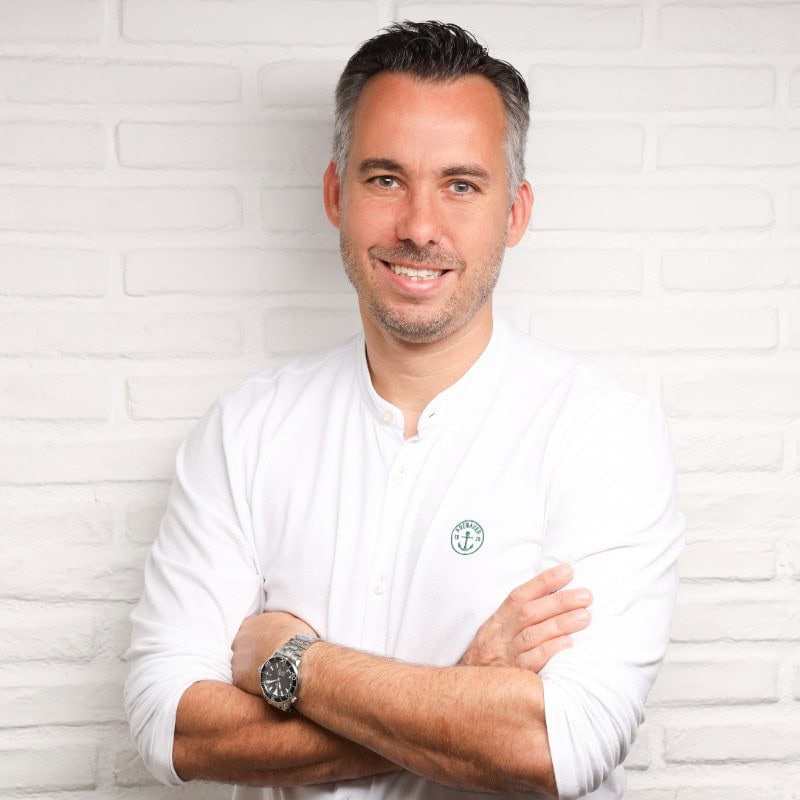
Balancing work, family and an international MBA degree — is that even possible? Sascha Baae, a senior executive at a globally active IT company and current participant in the MBA programme at Opresnik Business School (OBS), speaks with Prof. Dr. Marc Oliver Opresnik about his experiences, challenges and insights from his studies.
Professor Opresnik:
Mr Baae, you are currently enrolled in our MBA programme whilst holding a demanding professional role. How do you manage to combine your studies with the demands of everyday working life?
Sascha Baae:
It was a question I asked myself before I began. I can now say with confidence: yes, it is challenging — but it works very well, largely because of the flexibility built into the programme. The modules are clearly structured, the live sessions are recorded, and the transcripts make it straightforward to revisit content efficiently. That flexibility proved especially important whenever short-notice commitments arose at work.
Professor Opresnik:
How do you find the time required for the written assessments?
Sascha Baae:
The module reports are demanding in terms of content, but with discipline they can be completed within a realistic timeframe. The topics are known well in advance, which means I can capture and pre-structure key material even during the live sessions. Because the reports are reflective in nature, I can often draw on specific situations from my own professional environment — anonymously, where appropriate. This significantly enhances the practical relevance compared with conventional examinations at other institutions.
Professor Opresnik:
You mention practical relevance. In what ways do you find the MBA programme enriching your day-to-day work?
Sascha Baae:
Direct application is genuinely one of the greatest strengths of the programme. Many topics — strategic management, leadership, marketing — can be applied immediately to real situations in project work and daily operations. In one of my module reports, for instance, I reflected on a professionally challenging scenario, which proved not only academically valuable but also a productive basis for discussion within my team.
Professor Opresnik:
How would you assess the international dimension of the programme — in terms of language, methodology and the qualification itself?
Sascha Baae:
The English-language component is very manageable, even without native-speaker ability. The professors and lecturers are highly approachable, the materials are clear and accessible, and fellow students from other countries are equally non-native speakers — so there is really nothing to be concerned about. As for the qualification itself, international recognition was a decisive factor for me. An MBA from a British university commands respect, enhances one's professional reputation, and invariably makes for an engaging conversation in any context.
Professor Opresnik:
What would you say to prospective applicants?
Sascha Baae:
Be clear-eyed about the fact that studying alongside work is entirely feasible, but requires genuine discipline. Anyone willing to engage seriously with their own professional challenges will gain a great deal from the MBA. For me, it was unquestionably the right decision.
Professor Opresnik:
Finally — what were the particular challenges you faced personally during your studies, and what do you wish you had known from the outset?
Sascha Baae:
One initial challenge was the transition to academic writing in English. It is quite different from composing emails or presentations in everyday professional life. However, with the clear format guidelines and the content support provided by the teaching team, it proved very manageable.
What I wish I had known earlier: just how much material from my own professional life I could legitimately draw upon. Had I been aware of that from the start, I would have approached my first assignments with even greater confidence and thought more deliberately about which practical examples to bring into my studies.
Conclusion:
The OBS MBA programme demonstrates that studying whilst working is not only possible, but can actively contribute to the development of specialists and future leaders — practice-oriented, internationally recognised, and with tangible added value for both organisations and careers. The programme is also open to candidates without a traditional academic degree — further details are available on the MBA without a bachelor's degree page.